
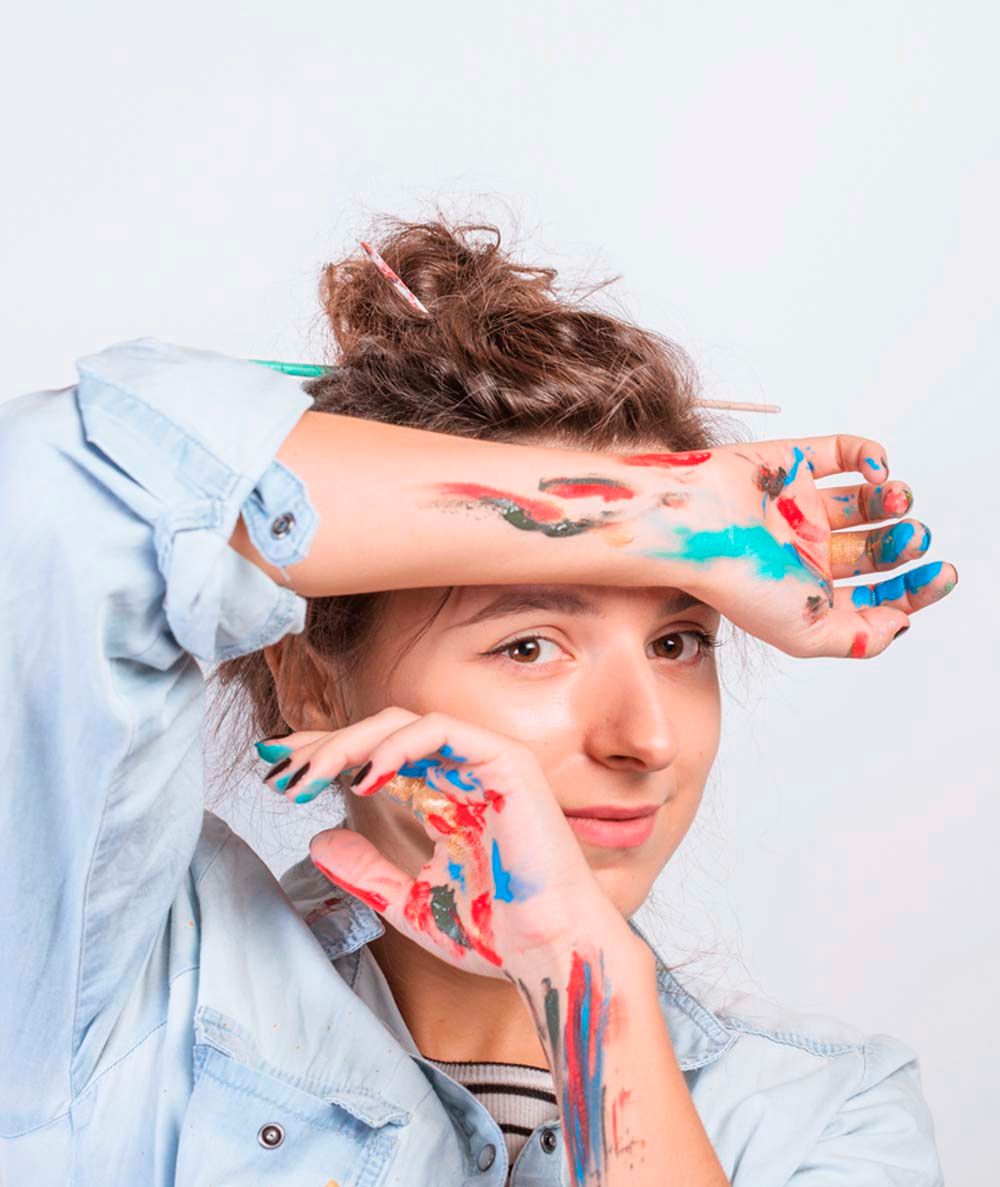
Art Therapy with Teens
By Huma Durrani.
Challenging behaviours in adolescents and teenagers are often symptomatic of underlying stress related to academic pressure, exposure to and overuse of social media and technology, peer pressure, and relationship problems. These stressors can result in low self-esteem, difficulty with self-regulation, depression, anxiety, addiction, self-harm and so on. To address the aforementioned issues, a therapeutic intervention should focus on:
Teaching self-regulation
Improving distress tolerance
Identifying and restructuring dysfunctional patterns of thinking
Addressing underlying emotions
Promoting insight and reflection
Facilitating transformation and resolution
Art therapy can target each of the above areas in a non-confrontational, non-threatening way where the artwork acts as a buffer as well as a container of difficult emotional content that may not be accessible to words. Art materials can facilitate emotional regulation through inherent qualities that can evoke or modulate affect. For instance, paint is a fluid and evocative medium that can cause arousal as well as tap into deep emotional content. On the other hand, clay is earthy and malleable, and can be calming and grounding. Therefore, engaging with art materials helps channelize highly charged emotional content into the process of art making and more often than not results in an end product that also acts as a record of progression.
The process of art making is as important as the art product in promoting insight into cognitive patterns of thinking that may require restructuring and re-contextualizing. The art product is reflected upon to reveal these patterns as well as other emotional issues that may be contributing to feelings of distress and unhappiness. The art therapist facilitates the development of the artmaking process and product to aid transformation and a positive outcome.
Art therapy works especially well for resistant teenagers who may not be open to or do not respond to traditional forms of therapy. It is a softer yet powerful approach that can tap into the unconscious, which manifests through creative expression. The art-making process provides relief, and the art product offers tangible evidence of underlying emotional content that aids insight and resolution.
CognitionDistress ToleranceMental Health SupportSelf-regulation