


Music Therapy

A clinical approach to healing through sound, rhythm, and musical connection. No musical talent required.

Music Therapy

What Is Music Therapy?

Music therapy is a therapeutic practice that uses sound, rhythm, listening, and musical interaction to support emotional expression, regulation, and connection. It is facilitated by a trained, registered music therapist, not a music teacher with a therapeutic label.

Unlike traditional talk therapy, music therapy does not rely on finding the right words. Instead, you engage through listening, playing instruments, singing, songwriting, or moving to rhythm, and your therapist helps you explore what emerges. No musical skill or experience is needed; the value is in the process, not the performance.

How a Session Typically Works

  1. 1.Check-in: Your therapist gets a sense of how you are feeling today
  2. 2.Sound exploration: You are introduced to instruments, recorded music, or rhythm activities.
  3. 3.Musical engagement: You play, listen, sing, or move. Your therapist observes and guides.
  4. 4.Reflection: You talk about what came up, if you want to.

Benefits of Music Therapy

01
Supports regulation through rhythmRhythm and tempo may support breathing, attention, and awareness of stress responses.
02
Accesses emotion through soundMusic may evoke memories and feelings that are difficult to approach through words alone.
03
Supports focus and attentionShared music-making may offer connection without requiring small talk or eye contact.
04
Supports connection without conversationShared music-making may offer connection without requiring small talk or eye contact.
05
Adapts across ages and abilitiesActivities can be tailored to communication style, developmental needs, preferences, and goals.

Who May Benefit Most From MusicTherapy

Each group below links to a dedicated page with more specific guidance.

YOUR FIRST VISIT

What to Expect in Your First Session

Introduction

Getting comfortable and settled in.

Meet the Instruments

Your therapist introduces the musical tools available to you.

Guided Exploration

You play, listen, or move. Your therapist observes and guides.

Reflection

You talk about what came up, at your pace.

Next Steps

Scheduling and planning ahead together.

Music Therapists Ready to Match With You

Kathleen Skinner, Music TherapistVettedHybrid

Kathleen Skinner

Music TherapistCA

  • Person-Centered or Humanistic Therapy
  • Dialectical Behavior Therapy (DBT)
  • Trauma-Focused Therapy
View full profile
Elaine Cheung, Music TherapistVettedHybrid

Elaine Cheung

Music TherapistCA

  • Person-Centered or Humanistic Therapy
  • Dialectical Behavior Therapy (DBT)
  • Internal Family Systems (IFS)
View full profile
Kashif Ali, Art Therapist, Drama Therapist, Play Therapist, Dance and Movement Therapist, Music Therapist, Expressive Arts TherapistVettedOnline Sessions

Kashif Ali

Art Therapist, Drama Therapist, Play Therapist, Dance and Movement Therapist, Music Therapist, Expressive Arts TherapistAF

  • Psychodynamic Therapy
  • Cognitive Behavioral Therapy (CBT)
  • Couples Therapy / Marriage Counseling
View full profile

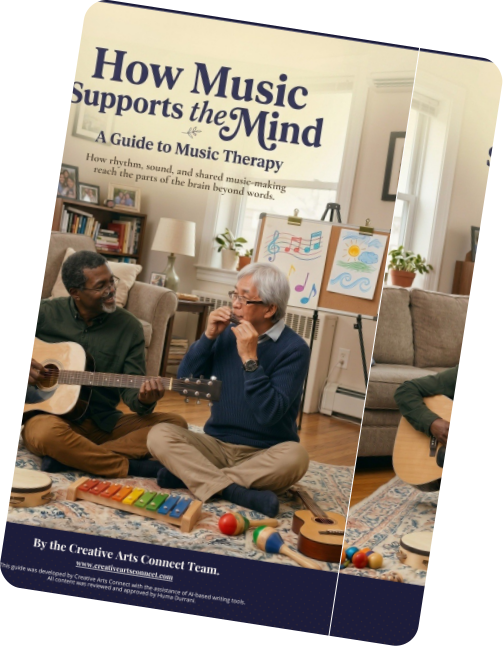
Free guide

Exploring Music Therapy: A Guide to Getting Started

Discover how music therapy uses listening, rhythm, sound, and music-making to explore feelings and support connection—no musical skills or experience needed.

  • Understand what happens in a session and how it differs from a music lesson
  • Explore different ways to engage with music, from listening to creating your own
  • Find out what to look for when choosing a music therapist
Free guide cover

From the Blog

Frequently Asked Questions

Do I need to be good at music to try music therapy?

No. No musical skill or experience is needed. Music therapy is about the process, not the performance. You will not be asked to play well, sing in tune, or read sheet music. Your therapist will guide you through activities designed for emotional expression and healing, not musical achievement.

What ages is music therapy for?

Music therapy can be adapted for young children, teens, adults, and seniors, including some people who communicate without speech or live with dementia. Suitability and goals vary by person, setting, and therapist training, so ask how the approach would be adapted to your needs.

Is music therapy covered by insurance?

Coverage varies by country, region, insurer, benefit plan and the therapist's professional designation. In Canada, for example, reimbursement may depend on whether the therapist also holds a regulated designation recognized by the plan. Ask which credential will appear on receipts and confirm eligibility directly with your insurer before beginning therapy.

How is this different from a music class or choir?

Music therapy is a clinical practice facilitated by a trained, accredited therapist. The goal is emotional, psychological, or developmental, not musical. A music class teaches skills and technique. Music therapy uses sound and rhythm as tools for self-expression, regulation, and healing. The focus is on what the music helps you feel, not how it sounds.

Can I do music therapy online?

Yes. Many music therapists offer virtual sessions using simple instruments, recorded music, or voice-based activities. Online sessions work well for listening-based and songwriting approaches. Your therapist will guide you on any materials you might want to have on hand.