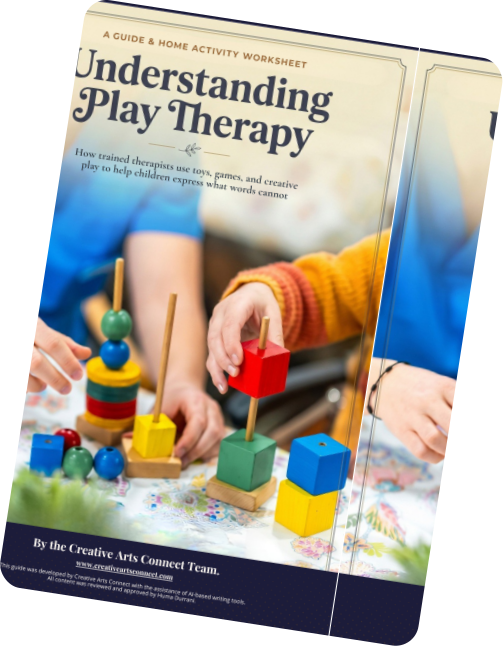
A clinical approach to helping children heal, grow, and communicate through their most natural language: play.
What Is Play Therapy?
Play therapy is a therapeutic practice that uses toys, games, sand trays, puppets, and imaginative play to help children communicate, explore experiences, and develop coping skills. It is facilitated by a trained, registered therapist, not a childcare worker with a box of toys.
Children do not process the world the way adults do. They rarely sit down and talk about their feelings. Instead, they show you through play: what they fear, what confuses them, and what they need. A play therapist observes, guides, and responds to what emerges, helping the child make sense of their inner world at their own developmental pace.
How a Session Typically Works
1.Warm-up: Your child settles into the playroom and chooses what to explore.
2.Free or guided play: The child plays freely or follows the therapist's gentle lead.
3.Therapeutic observation: The therapist watches patterns, themes, and choices.
4.Closure: The session wraps with a calm transition back to you.
Benefits of Play Therapy
01
Speaks the child's languagePlay is how children naturally communicate. It lets them express what words cannot yet reach.
02
Explores difficult experiencesStories, dolls, and sand may help children approach loss, change, fear, or trauma gradually.
03
Supports emotional regulationChildren may practise naming feelings and trying new responses within a supported setting.
04
Strengthens the parent-child bondMany play therapy approaches include parents, teaching you how to respond in ways that deepen connection.
05
Develops social and problem-solving skillsTurn-taking, negotiation, and cooperation emerge naturally through therapeutic play.
Kids do not usually announce that something is wrong. More often it shows up sideways, in a sudden change of mood, a new habit of avoiding certain topics, or a tantrum that feels bigger than the moment calls for. As a parent, it can be hard to tell what is a normal part of growing up and what might be a sign your child could use some extra support.
Your teenager used to tell you everything, or maybe they never quite did, but lately even the small updates have stopped. Doors close a little more often. Questions get one-word answers. You are not imagining it, and you are not doing anything wrong by noticing.
Dinner gets quieter more often than it used to. A coparenting handoff turns into a tense exchange. A teenager who used to talk about everything now answers in one word. None of this feels like a crisis exactly, but it feels like
Is play therapy really therapy, or is it just play?
Play therapy is real, clinical therapy conducted through the medium of play. A trained therapist uses toys, games, and creative activities to help children express emotions they cannot put into words, process difficult experiences, and develop healthier coping strategies. The play is purposeful and therapeutic, even when it looks like ordinary play to an observer.
What ages is play therapy for?
Play therapy is commonly used with children, but age ranges and methods vary by practitioner, training, and the child's developmental needs. Sessions may include free play, puppets, sand trays, games, or storytelling. Some therapists also use play-based elements with teens or adults within broader therapeutic approaches.
Is play therapy covered by insurance?
Coverage varies by country, region, insurer, benefit plan and the therapist's professional designation. In Canada, for example, reimbursement may depend on whether the therapist also holds a regulated designation recognized by the plan. Ask which credential will appear on receipts and confirm eligibility directly with your insurer before beginning therapy.
Will I be involved in my child's therapy?
Parent or caregiver involvement is often important, although the format depends on the child's age, needs, confidentiality, and the therapist's approach. This may include an intake, periodic updates, joint sessions, or parent coaching. Ask the therapist how they involve caregivers and communicate about progress.
Can play therapy be done online?
Some therapists offer play therapy online, using drawing, storytelling, puppet play, and guided imaginative activities. Suitability depends on the child's age, attention, privacy, technology, and clinical needs. The therapist can explain what materials and caregiver support may be needed and whether virtual or in-person sessions are more appropriate.